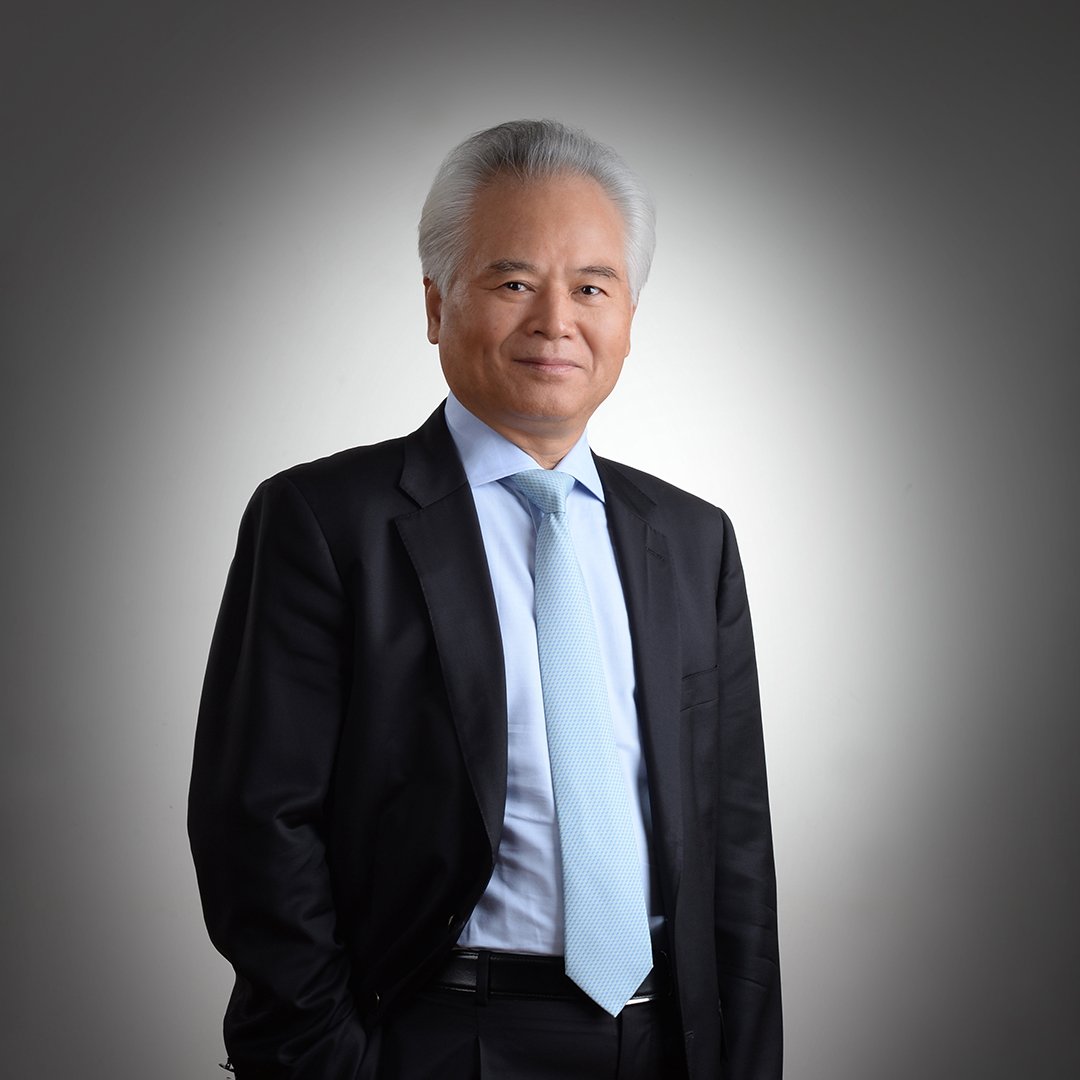
Founder & Chief Expert
Wu Shicun
Dr. Wu Shicun is Chairman of the Huayang Center for Maritime Cooperation and Ocean Governance; Founding President, Chairman of the Academic Committee, and Senior Research Fellow of China’s National Institute for South China Sea Studies. He holds a Ph.D. in History and is a research fellow and doctoral supervisor. He is an Adjunct Professor of Nanjing University, a member of the Academic Committee of the Center for International Security and Strategy at Tsinghua University, and a member of the Second Policy Advisory Committee of the Chinese Ministry of Foreign Affairs.
From 1993 to 20 00, Wu Shicun participated in the China-Vietnam Beibu Gulf demarcation negotiations as a member of the Chinese delegation and expert group. He has pursued advanced studies at the Johns Hopkins School of Advanced International Studies, the Asia-Pacific Center for Security Studies, and the Harvard Kennedy School.
Wu Shicun has devoted more than 30 years to South China Sea issues. He has long been engaged in interdisciplinary research on the history and geography of the South China Sea, maritime delimitation, international relations and regional security, ocean governance, and the development of the Hainan Free Trade Port. He has led more than 400 research projects of various kinds and published more than 30 books in Chinese and foreign languages, including A Bibliography of Research on the South China Sea, A Study on the South China Sea Dispute, Wu Shicun’s Response to Hot Questions on South China Sea, The Origin and Development of the Nansha Disputes: A Study on the History of the South China Sea Issue from a Country-Specific Perspective, History and Facts of the South China Sea, Selective Studies on World Famous Island Economic Bodies, and Hainan Free Trade Port: A Global Perspective. He has also published more than 400 academic papers and commentary articles in Chinese and English in leading Chinese and international academic journals and media outlets, including People’s Daily, Qiushi, Guangming Daily, China Daily, Global Times, South China Morning Post, and The National Interest.
Related Articles
No related articles available.