Huayang South China Sea Narrative
Wu Shicun Conducts Academic Exchanges in Belgium
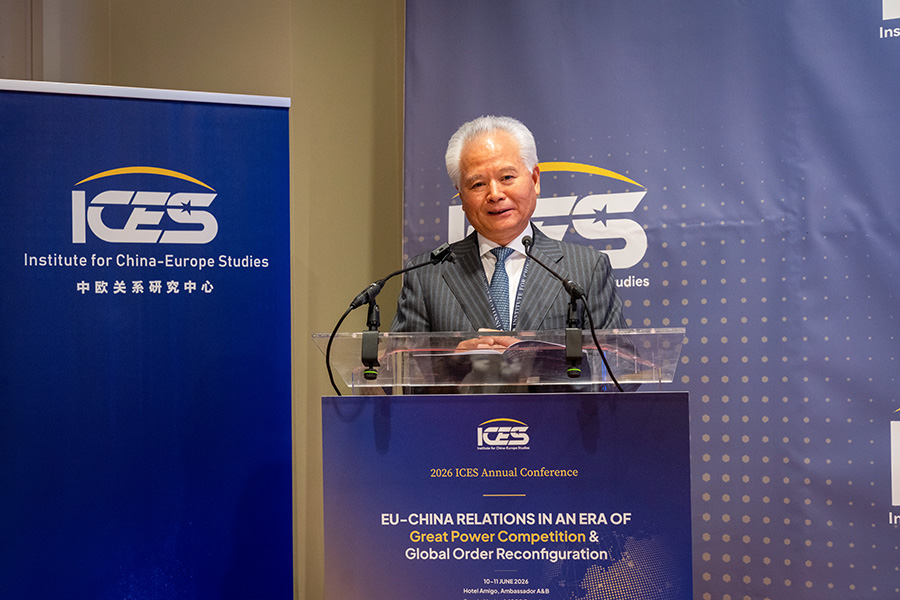
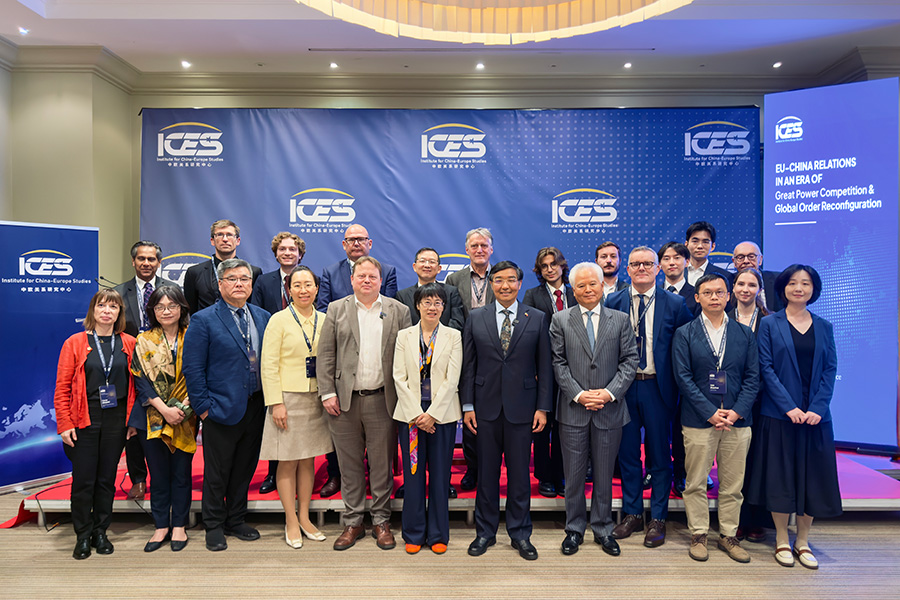
On June 10 local time in Brussels, Wu Shicun, Chairman of the Huayang Center for Maritime Cooperation and Ocean Governance (Huayang Center) and Chairman of the Academic Committee of the National Institute for South China Sea Studies (NISCSS), attended the 2026 Annual Conference of the Institute for China-Europe Studies (ICES) and delivered a keynote speech.
The conference was hosted by ICES and co-organized by NISCSS, the Institute for Security and Development Policy (ISDP), and the Institute for China-America Studies (ICAS). More than 20 experts and scholars from China, Europe, and the United States held discussions on topics including “Beyond De-risking: Toward a Resilient Framework for EU-China Economic Relations,” “The Third Variable: Dynamics and Trade-offs of EU-China-US Relations,” “Shared Horizons: Managing EU-China Ties through Ocean Stewardship,” and “Framing the Future: How Narratives Define the EU-China Dialogue.” Nearly 100 representatives from academic, political, and business communities attended the annual conference. Chinese Ambassador to Belgium Fei Shengchao delivered a luncheon speech, and officials from the Chinese Mission to the European Union attended the conference.
In his keynote speech, Wu Shicun noted that against the backdrop of profound changes in the international landscape and intensifying major-power competition, China and Europe have an even greater need to maintain stable and predictable channels of communication. He stressed the importance of avoiding the unwarranted securitization of normal economic, trade, scientific, and technological cooperation, and of preventing “de-risking” from sliding into “de facto decoupling.” Wu Shicun emphasized that, as two major global forces, China and Europe should expand consensus and deepen cooperation in upholding multilateralism, stabilizing the world order, addressing climate change, and advancing maritime governance. He also noted that think tank exchanges should play an important role in enhancing mutual understanding, bridging differences, and rebuilding mutual trust.
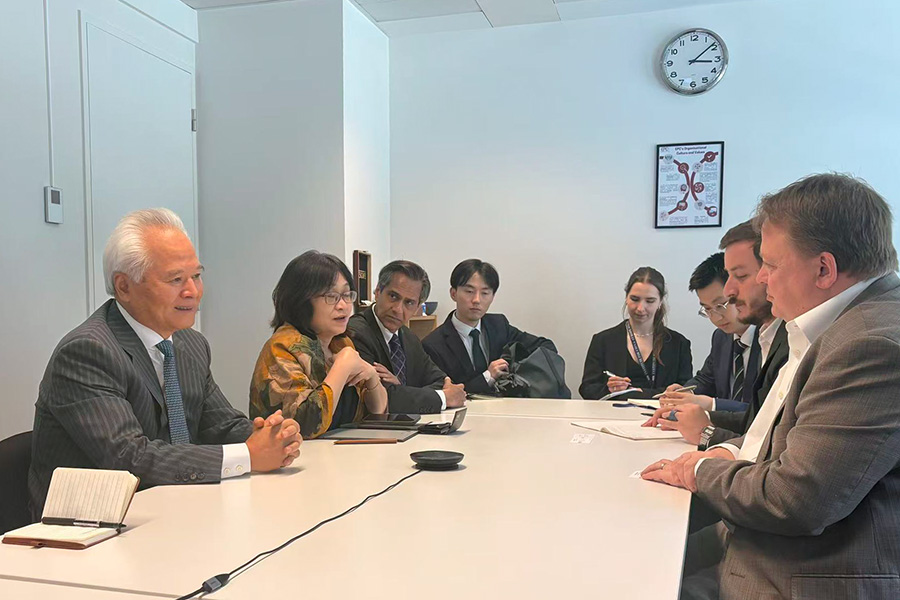
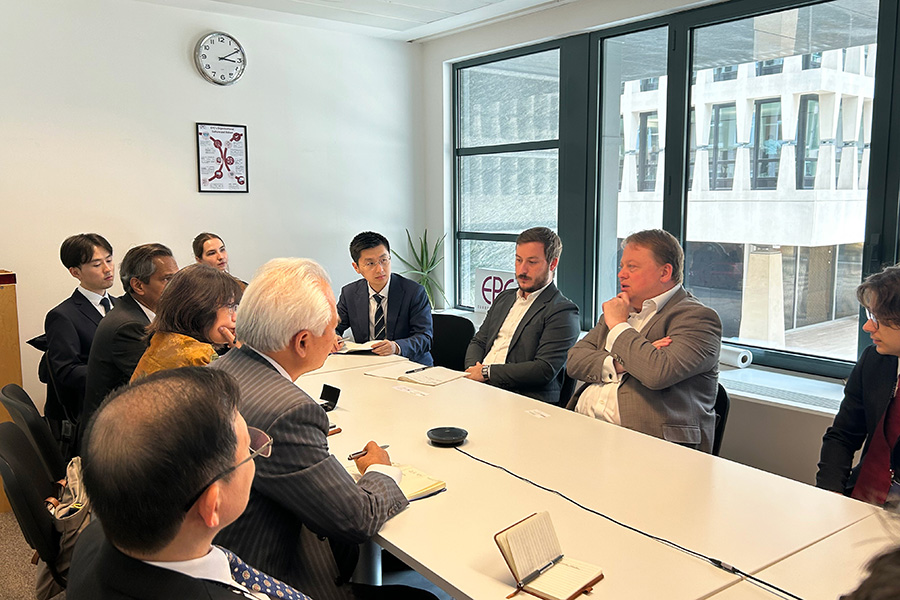
On the same day, Wu Shicun visited the Brussels-based think tank European Policy Centre (EPC), where he held broad and in-depth exchanges with Fabian Zuleeg, Chief Executive of EPC; Ivano di Carlo, Senior Policy Analyst; and other researchers on China-Europe relations, the Russia-Ukraine conflict, Europe-US relations, and European strategic autonomy.
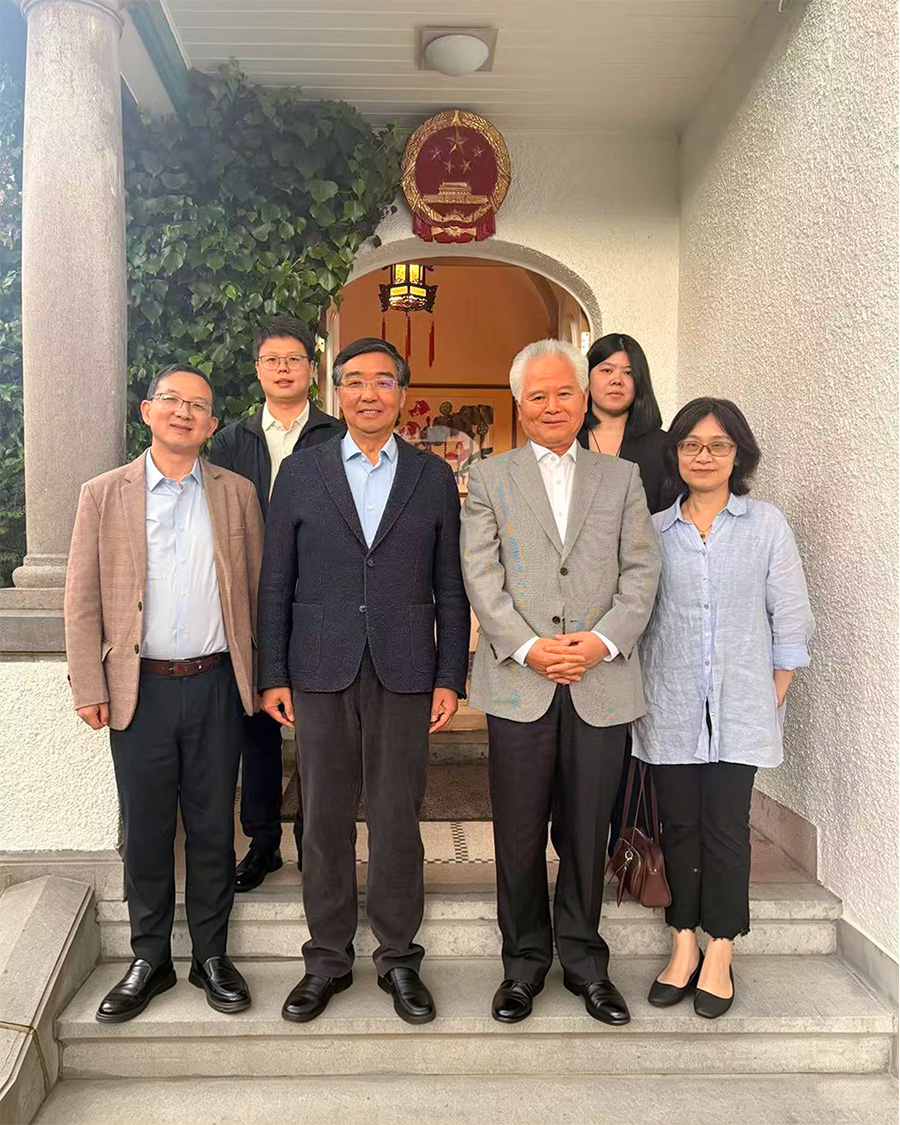
Wu Shicun and his delegation also visited the Chinese Embassy in Belgium and paid a courtesy call on Ambassador Fei Shengchao.
Yang Li, Executive Director of ICES, and Hong Nong, Executive Director of ICAS, accompanied Wu Shicun during the academic exchanges and courtesy calls in Brussels.