Huayang South China Sea Narrative
South China Sea expert warns 2026 code of conduct is 'simply not achievable'
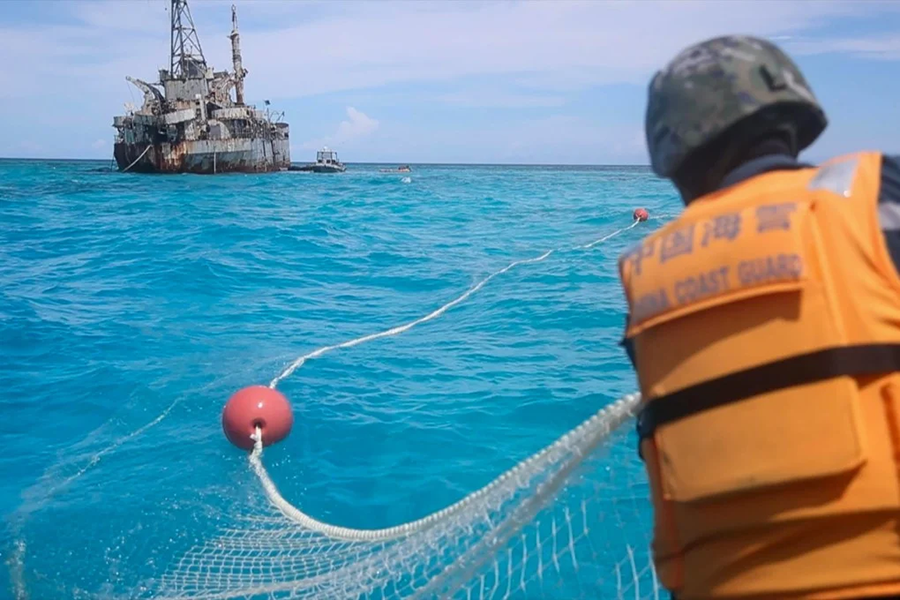
A veteran South China Sea expert has cast doubt on the prospects of finalising a code of conduct for the contested waters this year, even as ties between rival claimants Beijing and Manila show signs of improvement.
Wu Shicun, founding president of the National Institute for South China Sea Studies, said it was "100 per cent not likely" that the document would be signed this year as the Philippines takes over the rotating chair of the Association of Southeast Asian Nations (Asean).
"I believe it cannot be successfully negotiated under the Philippines' watch. They will inevitably bring up the arbitration ruling," Wu said.
A landmark 2016 ruling by an international tribunal in The Hague rejected Beijing's expansive claims to historic and economic rights over most South China Sea features.
Beijing refused to take part in the arbitration process – initiated by the Philippines in 2013 – or accept the ruling, arguing that the tribunal did not have the jurisdiction to rule on the sovereignty disputes.
Other claimant states, along with the United States and other Western countries, have often cited the case to claim that China did not abide by international law.
Wu said that while it was possible for countries to create a "light version" of a framework with fewer provisions, Asean would be unwilling to go that route.
He noted that both Malaysia and Indonesia had failed to finalise the code of conduct during their respective terms as Asean chair.
"Given the Philippines' influence on the South China Sea issue and their continuous posturing, how could the code of conduct possibly be concluded under [Manila's] watch? It's simply not achievable," Wu said.
The foreign ministers of China and Asean, which has 11 members, have agreed to finalise the code of conduct this year.
The framework, under negotiation since the early 2000s, has long been seen by countries in the region as key to managing tensions in the strategically important waters.
However, little concrete progress has been made as states remain deeply divided over fundamentals, such as whether it should be legally binding and the maritime activities it would cover.
Wu stressed there was "little prospect for improvement" in China-Philippines ties over the disputed waters, despite signs of easing ties between the two claimants whose long-standing maritime tensions have frequently escalated into clashes.
Last month, the Philippines appointed Rogelio Villanueva Jnr, a former navy officer, as the country's first official spokesman dedicated to maritime affairs.
Wu said the appointment would do little to change the situation.
He noted that the Philippines' foreign affairs department had limited influence over South China Sea issues compared with its coastguard, which explained its less assertive stance.
"Ideally, the Philippine foreign ministry would be able to take the lead on the South China Sea issue and guide foreign policy thinking, among other things, but in reality, its voice does not carry weight on this matter," he said.
According to Wu, both Philippine Secretary of Foreign Affairs Theresa Lazaro and Asean Secretary General Kao Kim Hourn voiced confidence in completing the code by the end of the year during a private round table on maritime security held at the Munich Security Conference last month.
Manila has said it is in talks with Beijing to start joint coastguard patrols in the contested waters, with a memorandum of agreement expected to be signed by the end of this month.
Beijing has yet to confirm whether those talks are in progress.
The Philippines, citing Chinese ambassador Jing Quan, has said the two sides are expected to carry out joint patrols, search and rescue operations or environmental missions.
This is an interview of Wu Shicun, Chairman of the Huayang Center for Maritime Cooperation and Ocean Governance, and Chairman of the Academic Committee of NISCSS. This article was originally published on SCMP. Read the original article at: https://www.scmp.com/news/china/diplomacy/article/3345137/south-china-sea-expert-warns-2026-code-conduct-simply-not-achievable